
Water, crystals, jewelry, written intentions, and personal objects often appear in radionics practices because they provide a tangible focus. In Fire Toolz, you can organize a symbolic material-imprinting operation by identifying the exact item, selecting a coherent tendency, configuring transfer cards, running a tested template, and labeling the physical object afterward.
The most important work happens before you press Start. You must know which item you are using, whether it is safe to handle or consume, what the operation is intended to represent, and how you will prevent one bottle or crystal from being confused with another. Fire Toolz cannot purify unsafe water, add nutrients, sterilize food, repair a damaged object, or verify a physical change in a material.
This guide presents charging as a deliberate spiritual and organizational practice. It covers photographs, labels, beneficiary positions, filters, water safety, crystal care, timing, sequences, storage, and factual logs. The aim is a process you can repeat and explain without turning symbolism into a guarantee.
1. Define the Item, the Purpose, and the Practical Boundary
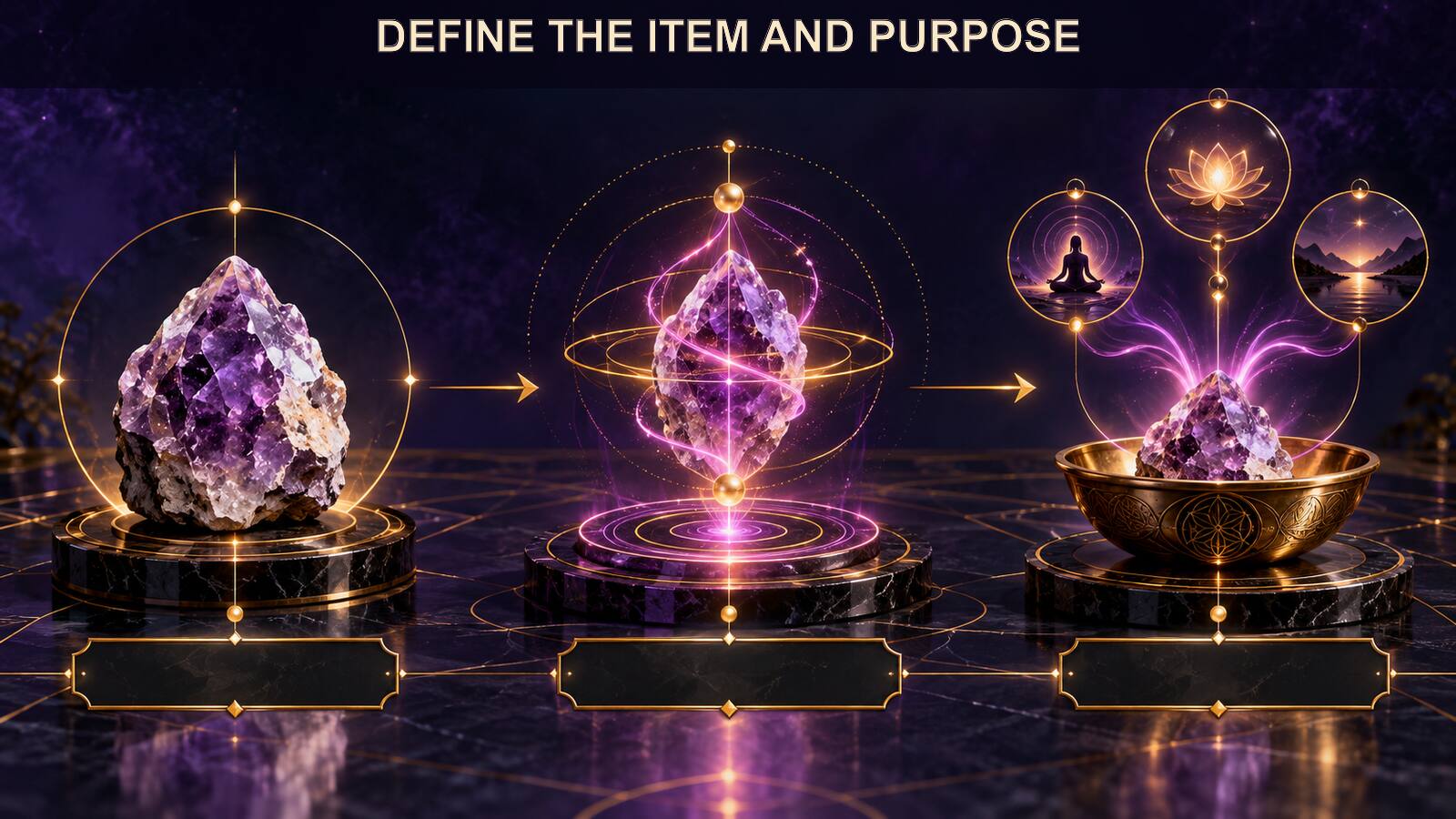
Begin with one physical item. Do not prepare an unlabeled group and assume you will remember which photograph belongs to which object. Place the item on a clean surface, give it a simple identifier, and take a current photograph.
Write one purpose. “Use this labeled bottle as a reminder of calm hydration during my afternoon routine” is clear. “Transform any liquid into a cure for every condition” is an unsafe claim. A symbolic charging practice does not change the medical, chemical, or nutritional properties you must verify through ordinary means.
Define the practical boundary beside the intention. Drinking water must already come from a safe source. Food and supplements must remain within their normal storage and expiration requirements. Crystals that react with water should not be placed in a drink. Jewelry must be checked for sharp edges, loose stones, and skin reactions.
If the item belongs to another person, obtain consent before using their photograph or preparing a personalized operation. Do not give someone a charged substance while hiding what you did or making health claims. Transparency is part of respectful practice.
Choose how the item will be used afterward. A bottle may accompany a hydration habit. A crystal may sit on a desk as a focus cue. A bracelet may remind you to pause before responding. Connecting the object to a voluntary action gives the ritual a practical role.
Record the item identifier and date. This creates the first link between the physical object, its photograph, and the Fire Toolz template. The link is organizational and symbolic; it is not a scientific measurement of the material.
2. Photograph and Label the Exact Physical Item

Use a photograph of the actual bottle, crystal, pendant, written card, or object whenever possible. A stock photograph of a generic crystal may be beautiful, but it does not help you distinguish the amethyst on your desk from another stone in a drawer.
Place a small identifier beside the item while photographing it. Use a private code rather than sensitive personal information. Make sure the code appears in your notes even if you crop it out of the final position image.
Photograph the item in even light against a simple background. Show features that make it recognizable: shape, color, container, lid, chain, engraving, or label. For water, photograph the sealed or covered container you will actually use.
Create the digital file with a descriptive, privacy-safe name. water-blue-bottle-2026-10-20.jpg is easier to audit than image123.jpg. Store it in the project’s image folder before attaching it to Fire Toolz.
Label the physical object as well. A removable tag can show the identifier, purpose category, and preparation date. Do not write directly on a valuable or porous surface if that could damage it.
When several items look alike, keep them apart throughout setup and use. Finish and document one before beginning the next. A precise template cannot compensate for a mix-up on the table.
3. Build a Simple Material-Imprinting Template

Start with a small layout. One position can contain the selected tendency or filter, another can identify the physical item as the beneficiary, and an optional final position can represent closure or grounding within your chosen framework.
Configure the tendency position with an image, short functional name, and clear decree. Use wording that describes the symbolic quality and associated action. For example: “This bottle accompanies my calm, regular hydration routine.”
Configure the beneficiary position with the photograph and item identifier. If a person will use the item, decide whether the operation is directed toward the object, the person, or a relationship between the two. Do not leave that distinction ambiguous.
Add and enable the appropriate Chi transfer card. Confirm the image and enabled state. The transfer card is part of the radionics method; it does not establish that a measurable substance is entering the item.
Choose a neutral background that keeps the cards readable. Audio is optional. A short chime or calm track can structure the session, but it is not required for charging.
Write Notes explaining what must be personalized: item photograph, identifier, purpose, date, timing, and handling instructions. Save this as a clean master without private data, then create a dated working copy for the actual item.
4. Prepare Water Without Ignoring Water Safety

Use water that is already safe for its intended use. Fire Toolz does not remove pathogens, heavy metals, chemicals, allergens, or other contaminants. If the water is not safe to drink before the operation, do not drink it afterward.
Choose a clean food-safe container with a secure lid or cover. Avoid leaving drinking water uncovered near a computer, candles, incense, dust, pets, or handling materials. Keep liquids far enough from electronics to prevent spills.
Label the container before photographing it. Include the identifier and preparation date. If the water needs refrigeration, continue to refrigerate it. A symbolic operation does not change food-safety storage requirements.
Do not place unknown crystals, metals, herbs, oils, or powders into drinking water. Some stones can dissolve, shed particles, contain metals, or be treated with dyes. If you want a crystal to serve as a visual focus, keep it outside the closed container unless you have reliable safety information for direct contact.
Create the beneficiary position from the actual container photograph. Use a decree that supports the chosen ritual or habit without claiming purification or treatment. Keep medical hydration needs under qualified guidance.
After the session, inspect the container normally. If the seal failed, the water was contaminated, or storage conditions were unsafe, discard it as you would any other questionable water. Do not use the charging ritual as a reason to ignore visible or practical warning signs.
5. Prepare Crystals and Stones Responsibly

Identify the stone as accurately as you can before choosing a cleaning method. Different minerals react differently to water, salt, sunlight, heat, and chemicals. When uncertain, use a gentle dry cloth and avoid immersion.
Inspect for sharp points, cracks, loose fragments, coatings, or dyed surfaces. Handle fragile specimens over a soft surface. Keep small stones away from children and animals who might swallow them.
Do not assume that “cleansing” requires physical water or salt. Within Fire Toolz, the operation can remain entirely symbolic while the crystal stays dry and protected. A photograph is enough for the digital beneficiary position.
Use a unique identifier for similar stones. Photograph each one separately. If a crystal is part of jewelry, show the complete piece and record the metal or setting where known.
Choose a purpose related to voluntary use: meditation cue, desk focus, reminder of a boundary, or symbol of a personal commitment. Do not promise that the crystal treats illness, prevents accidents, blocks radiation, or controls another person.
After the operation, store the crystal in a way that preserves it. Protect light-sensitive stones from prolonged sun and water-sensitive materials from moisture. The practical care of the object continues regardless of symbolic charging.
6. Prepare Jewelry, Talismans, Cards, and Everyday Objects
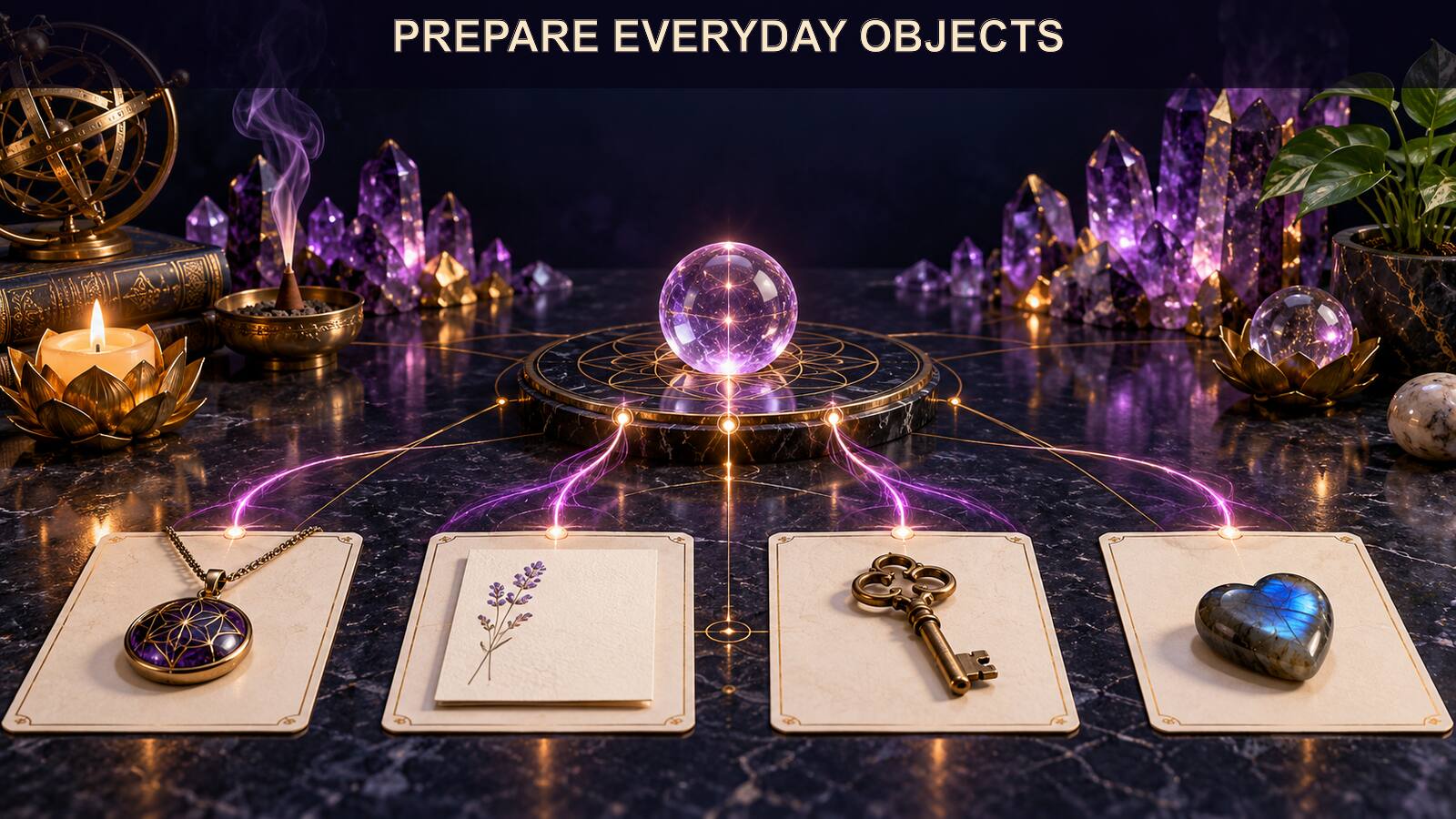
Everyday objects can include a pendant, bracelet, key, written card, journal, photograph, token, or tool. Begin with ordinary cleaning that is safe for the material. Do not use abrasive, liquid, or chemical methods that could damage it.
Inspect function. A bracelet clasp should close securely. A key should remain usable. A written card should be legible. A charging operation does not repair a broken mechanism or replace maintenance.
Photograph the exact item and give it one purpose. A bracelet can remind you to pause before speaking. A key can symbolize secure boundaries while you still lock doors and maintain access control. A card can carry a written intention while you continue the plan it represents.
Avoid using objects to manipulate another person. A gift should not conceal a practice intended to override the recipient’s decisions. If the object will be given away, describe the ritual honestly and let the person choose whether to accept it.
Protect cultural and intellectual property. Symbols, artwork, and sigils created by others may have meanings and usage rights. Use your own designs, licensed material, or resources included for your authorized use.
Record where the object will be stored and how it will be used. The physical plan prevents the item from becoming an unexplained artifact mixed with ordinary belongings.
7. Choose Filters and Write a Coherent Decree

Choose the smallest set of filters that expresses the purpose. One main tendency may be enough. Add a supporting filter only when it performs a different, explainable role.
Avoid combining unrelated goals. A water bottle does not need simultaneous decrees for sleep, wealth, romance, protection, creativity, and every health concern. Separate purposes into separate operations or choose the one that matters now.
Write the decree in plain language. Identify the object and the voluntary practice associated with it. “This labeled crystal serves as a reminder to return to calm breathing during my desk routine” is clear and limited.
Remove guarantees. Do not say the object will force an outcome, cure a condition, attract a particular person, or prevent every danger. Symbolic language can be meaningful without being presented as fact.
Check that every filter supports the same direction. If two filters seem to contradict each other, clarify the sequence or remove one. Complexity is not precision.
Read the decree aloud, update the position, and display the text during the first test. Visible wording helps you catch old identifiers and placeholders.
8. Choose Timing and Sequence Deliberately

For a first operation, use a supervised hands-on run. Confirm that the template displays correctly, the route advances, and the stop control works. Record the actual duration.
Use Automatic Clock when one prepared template needs a specific future window. Use Daily scheduling for a deliberate recurring routine. Use Artillery when multiple saved templates must run sequentially, such as cleansing, charging, programming, and closing stages in a method you understand.
Do not assume that longer is stronger. Choose duration from your practice and your ability to supervise the system. The computer must remain on, Fire Toolz must remain open, and sleep must be prevented for the planned window.
If a sequence repeats, decide why and when it will stop. Infinite repetition can consume resources and turn an intentional practice into unattended accumulation. Begin without repetition, verify every stage, then add a limited schedule only when needed.
Label the physical item before the sequence begins and do not substitute another object midway. Record the start and stop times, interruptions, and the final template reached.
After a power loss or restart, inspect the sequence before resuming. Do not restart blindly if that could duplicate stages or leave the item’s record unclear.
9. Run the Operation and Maintain Physical Control

Place the item in its planned safe location. It does not need to sit on the keyboard or touch the screen. Water should stay covered and away from electronics. Fragile crystals should rest on a stable surface.
Open the dated working template and verify the item photograph, identifier, decree, filters, transfer card, and timing. Compare the screen with the physical label one final time.
Start the operation while present. Watch the first route cycle, confirm optional audio, and verify that images render normally. Stop if the wrong item or template is loaded.
Maintain normal access to the object. The process should never prevent you from discarding unsafe water, moving a fragile crystal, or using an essential item. Symbolic charging does not create a requirement to keep something that is damaged or hazardous.
At completion, stop the operation and record the finish time. Close or save the template intentionally. Do not rely on memory to determine whether a session completed.
Update the physical label with the completion date and purpose category if that is useful. Keep the wording modest and factual: “prepared for personal focus ritual,” not “scientifically energized.”
10. Store, Use, and Dispose of Items Normally

Return water to appropriate storage and use it within normal safety limits. If the container was opened, contaminated, left at an unsafe temperature, or kept too long, dispose of the water. The ritual does not extend shelf life.
Store crystals in line with their material needs. Protect fragile points, coatings, and light-sensitive colors. Keep a note with the item if its symbolic purpose matters to you.
Use jewelry and objects only when physically safe. Repair loose clasps, clean skin-contact surfaces, and stop use if irritation occurs. A symbolic intention does not override the body’s response.
When the purpose ends, you can clear the label, archive the template, and return the object to ordinary use. You do not need a dramatic disposal ritual unless your personal practice calls for one and it is environmentally safe.
Do not bury plastics, metals, glass, candles, salts, oils, or treated objects outdoors. Dispose of materials through normal local waste or recycling systems. Do not pour unknown mixtures into soil or waterways.
Delete or protect photographs that contain personal information. Archive only the files needed for future use, with clear version names and access controls.
11. Keep a Material-Imprinting Log and Quality Gate

Create one log entry per item. Record the identifier, photograph filename, item type, source or ownership, safety checks, purpose, template version, start and stop times, and final storage location.
For water, record the source, container, preparation date, and storage requirement. For crystals, record the mineral identification if known and any water or light sensitivity. For jewelry and objects, note material, condition, and safe cleaning method.
Record technical facts: correct template opened, images present, transfer card enabled, route completed, audio played, no interruption, file saved. If something failed, say what happened instead of interpreting it as a metaphysical message.
Record the paired practical action. Did you drink water as part of a normal hydration plan? Did the desk crystal remind you to take a calm pause? Did the bracelet accompany the boundary you actually communicated? These observations keep the object connected to behavior.
Do not claim that the log proves physical imprinting or causation. It proves that you performed and recorded a symbolic procedure. Any claim about chemical, medical, or material change requires appropriate testing outside Fire Toolz.
Before each reuse, pass the quality gate: exact item, safe condition, correct photograph, current purpose, coherent filters, correct template, tested timing, secure storage, and voluntary practical use. If any item fails, correct it before running.
Review the collection periodically. Retire stale water, damaged objects, outdated templates, and operations that no longer have a clear purpose. Preserve licensed resources and private data responsibly.
12. Follow a Complete Worked Example: One Labeled Water Bottle

Choose a clean food-safe bottle with a secure lid and fill it from a drinking-water source you already trust. Write a private identifier and the date on a removable label. Keep the bottle covered and away from the computer.
Take a clear photograph of the sealed bottle against a plain background. Transfer the image to the project folder and give it a matching filename. Do not reuse an old generic bottle photograph; the purpose of the picture is to keep this exact item connected to its record.
Write the purpose: “This labeled bottle accompanies my normal afternoon hydration routine and reminds me to pause, breathe, and drink water calmly.” The statement makes no claim about purification or treatment. The practical action is ordinary hydration within any guidance relevant to your health.
Open a clean material-imprinting master. Configure the first position as Calm Routine with a suitable licensed image and the concise decree. Configure the second position as the item beneficiary and load the bottle photograph. Add the private identifier in the text field.
Open the Chi transfer-card manager. Select the intended card, load its image if necessary, and enable the entry. Return to the canvas and check that the correct card is active.
Use a static background so the beneficiary remains easy to see. Leave audio off for the first test. Save the file as a dated working version rather than overwriting the master.
Run a brief supervised test. Watch the route, confirm both images appear, verify the decree, and stop the operation. Reopen the file to make sure the photograph and card persist.
Choose a modest session window from the practice you understand. Keep the computer awake and the bottle safely covered. Start while present and observe the first cycle. If the wrong photograph or decree appears, stop immediately and correct the template.
At the end, record the finish time and close the operation. Update the bottle label with the completion date if useful. Return the bottle to normal storage.
Use the water within ordinary safety limits. Do not keep it indefinitely because it was part of a ritual. If the bottle becomes contaminated, smells unusual, was left open, or exceeds its reasonable storage period, discard the water.
Pair the object with the action. When you use the bottle, let the label remind you of the pause-and-hydrate routine. That behavioral cue is observable even though the radionics interpretation remains part of spiritual practice.
In the log, record the exact bottle, water source category, photograph, template version, timing, storage, and hydration action. This complete example can be adapted to a crystal or object by replacing the water-specific safety and storage steps with appropriate material care.
13. Answer Common Questions Before They Become Mistakes
Does the object need to touch the computer?
No. The Fire Toolz operation uses the configured photograph and identifying information within its symbolic method. Keep liquids and fragile objects in a safe location rather than placing them on electronics.
Can I use a generic image?
A generic image can represent a category, but it does not help you distinguish the exact item. For careful practice, photograph the actual bottle, crystal, or object and use a matching identifier.
Can one template charge several objects at once?
You can design a group operation, but it is harder to audit. Begin with one item. If you later use a group, photograph the complete labeled set and maintain an inventory so nothing is added or removed without updating the template.
How long should the operation run?
There is no universal duration that applies to every object and purpose. Follow the method you understand, start with a supervised test, record the actual runtime, and avoid assuming that longer means stronger.
Can I reuse the same template?
Yes, if you review and repersonalize it. Replace the item photograph and identifier, confirm the decree, inspect transfer cards and timing, then save a new dated version. Never assume that loading a new photograph updated every related field.
Does charging make unsafe water safe?
No. Use safe water and a clean container before the operation. Fire Toolz does not remove contaminants or replace filtration, treatment, testing, refrigeration, or other water-safety practices.
Can I put crystals in drinking water?
Do not place a stone in water unless you have reliable material-safety information for that exact mineral and treatment. Many stones are porous, soluble, coated, dyed, or contain metals. Keeping the crystal outside a closed bottle avoids direct contact.
Can I charge medicine or supplements?
Do not change doses, combine products, or replace medical advice because of a symbolic operation. Medicines and supplements must remain in their original safe storage and be used only as directed by qualified guidance and labeling.
Can I prepare an object for someone else?
Only with informed consent and honest disclosure. Do not hide the ritual, make guarantees, or use the object to influence a person’s choices. Respect their decision to decline.
How do I know it worked?
You can verify the procedure: the correct file opened, the photograph matched, the route completed, the item remained safe, and the practical action occurred. Fire Toolz does not provide scientific confirmation that the material’s physical properties changed.
What if the item is damaged afterward?
Treat damage as a physical problem. Stop using unsafe jewelry, discard compromised water, and protect or repair the object as appropriate. Do not interpret damage as a reason to ignore ordinary safety.
What should I share publicly?
Share a clean example without private names, identifiable photographs, purchase-only resources, or exact data connected to another person. Keep customer or beneficiary records private.
What is the simplest reliable routine?
Use one safe item, one private identifier, one current photograph, one clear purpose, one or two positions, one enabled transfer card, and one supervised run. Save a dated template, reopen it, verify every element, and record where the object is stored. This small routine contains every essential relationship without creating a complicated sequence that is difficult to audit.
When you become comfortable with that cycle, add only what serves a distinct purpose. A supporting filter, brief sound, scheduled window, or sequential stage should solve a real design need. If the addition makes identity, timing, or safety less clear, return to the simpler version.
The most reliable habit is to compare the physical label with the screen immediately before Start and immediately after completion. That single check catches the wrong photograph, wrong version, substituted object, and missing record. It also keeps the practice centered on the item you actually prepared rather than on a generic category or memory.
Simple identification is the foundation of safe, repeatable material-focused work.
Add one final handoff check whenever an item leaves your direct control. Confirm who will receive it, how it is identified, what ordinary care instructions accompany it, and whether the recipient understands that the Fire Toolz operation is a symbolic practice rather than a safety certification or medical treatment. Keep a private record of the handoff without exposing unnecessary personal information. If the item is water, food-adjacent, fragile, electrically powered, sharp, flammable, medicinal, or otherwise regulated by normal safety rules, those rules remain fully in force. A careful handoff prevents an organized digital operation from ending in careless physical handling.
Charging water, crystals, and objects with Fire Toolz can be a focused way to connect a physical reminder with an intentional practice. The method becomes stronger as a practice—not as a scientific claim—when every item is identified, safe, consent-based, technically verified, and linked to real action.
Explore material-focused templates and operation tools in Quantum Radionics Fire Toolz and begin with one clearly labeled item and one coherent purpose.