

When you decide to perform an energetic cleansing, the most important question is not how dramatic the operation looks. It is whether you have identified the beneficiary, chosen the right sequence, prepared every template correctly, and allowed the work to progress from clearing to restoration. A cleansing that starts strongly but never closes can leave the practitioner focused on what they are trying to remove. A pleasant harmonizing operation that skips the clearing stages may not address the problem that brought them to the work in the first place.
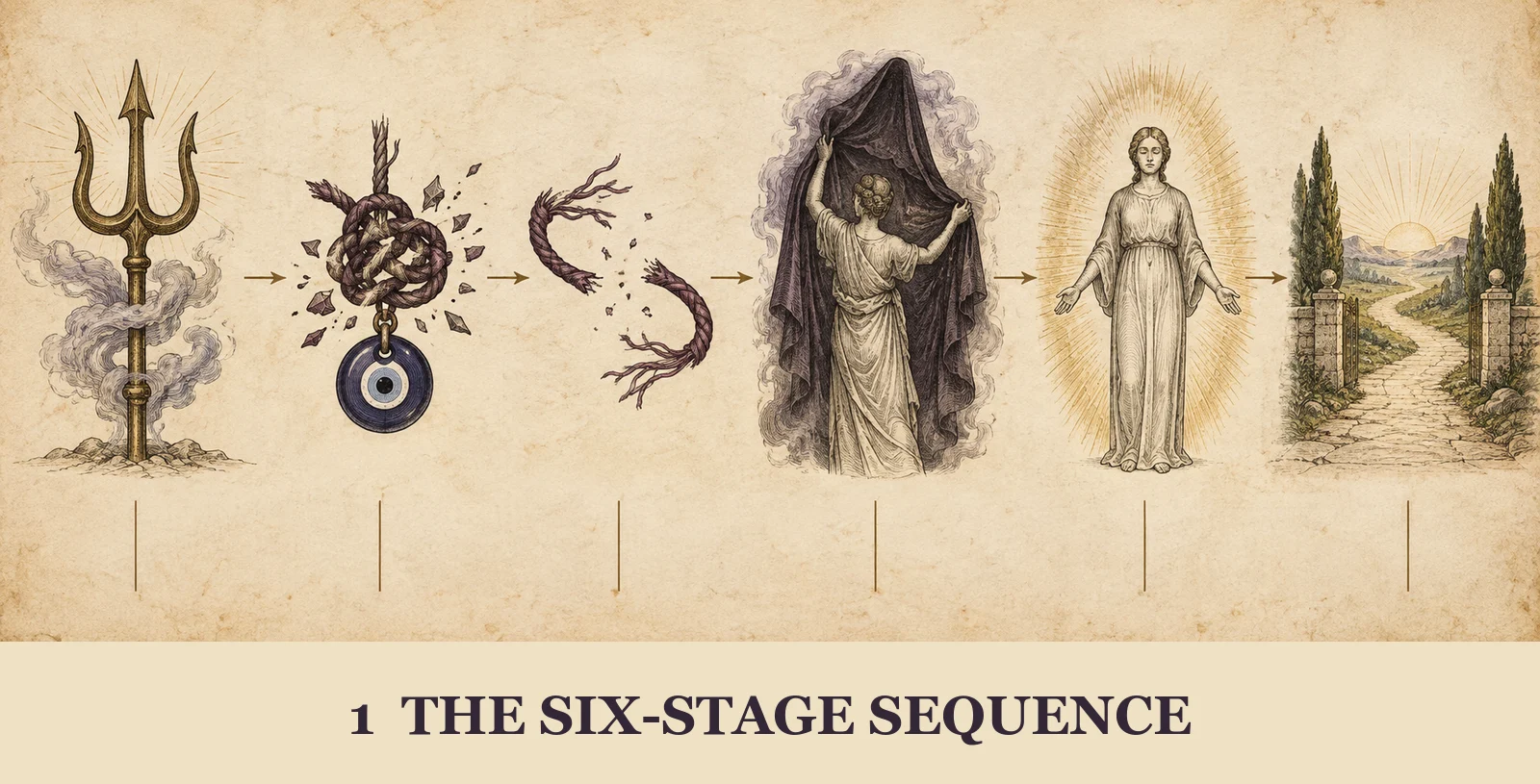
The six-step Fire Toolz protocol solves that problem with an ordered operation. It begins with Blasting Glyph, moves through Undo Magick, Psychic Vampire Clearing, and Remove Attachments, then completes Aura Clearing and Road Opener. Each stage has its own template and purpose. You personalize all six for the same beneficiary, save them as separate files, and run them consecutively through Artillery. In the six-file set shown below, the Step 1 file is labeled 45 minutes, and the remaining stages run for two hours each: ten hours and forty-five minutes in all.
I approach this as real esoteric work. The photograph, written name, radionic filters, transfer card, and sequence are the working structure of the operation. They deserve the same attention you would give any carefully prepared practice. At the same time, a difficult season in life does not prove that someone has cursed you. Keep the operation precise, ethical, and focused on the beneficiary's protection and recovery, without inventing an enemy.
Understand the architecture before you begin
The protocol is a progression, not six interchangeable cleansing buttons. Blasting Glyph opens with a forceful clearing. Undo Magick addresses witchcraft, negativity, envy, and the pattern practitioners call bad luck. Psychic Vampire Clearing disconnects draining links. Remove Attachments addresses persistent attachments. Aura Clearing clears and balances the aura. Road Opener directs the operation toward general success and open roads. The movement is deliberate: clear, undo, detach, remove, balance, and reorient.
In Fire Toolz, a template is the complete arrangement of the operation. It can contain radionic filter images, written decrees, a place for the beneficiary, a grounding position, a transfer card, sound, and visual settings. A filter specifies the tendency or action you are working with; the beneficiary position identifies who receives it. The transfer card traverses the positions when the operation runs. You do not have to rebuild each of the six templates from scratch if you already have the protocol files, but you do have to personalize and verify them.
This order matters most at the transition from clearing to repair. Imagine cleaning and preparing a room before you furnish it. The analogy is imperfect, but it clarifies the logic: the fifth stage does a different job from the first, and the sixth completes a different job from the fifth. Running the opening stage repeatedly while skipping the last two stages changes the operation. Running all six at once also destroys the sequence. Artillery should move through one saved template at a time.
Treat the protocol as a complete session. Do not mix unrelated manifestation work into the same beneficiary's cleansing while the six stages run. The intense opening may conflict with a positive operation aimed at the same target. Give this sequence its own space and let its closing stages complete. If your version includes Notes with different instructions for a specific template, read them before setting the timer; a filename alone is not enough to verify a version.
The six stages are not a device for discovering what happened, who acted, or whether an unseen influence exists. They are a structured means of doing the cleansing. That distinction keeps your attention on the work you can direct: a clear intention, a correctly linked beneficiary, an orderly run, and a sensible close.
What this cleansing is designed to clear
The protocol covers a broad range of unwanted influences named in esoteric and radionic practice. These include the evil eye, envy, curses, hexes, spells, hostile witchcraft, negative thought forms, projected ill will, oppressive atmospheres, draining energetic ties, psychic or mental attacks, psionic attacks, and hostile radionics operations. Practitioners also use the language of heavy works, crossed conditions, spiritual attachments, entity burdens, and recurring energetic interference. The six stages give these concerns a common clearing sequence instead of requiring you to improvise a different operation every time you encounter a new label.
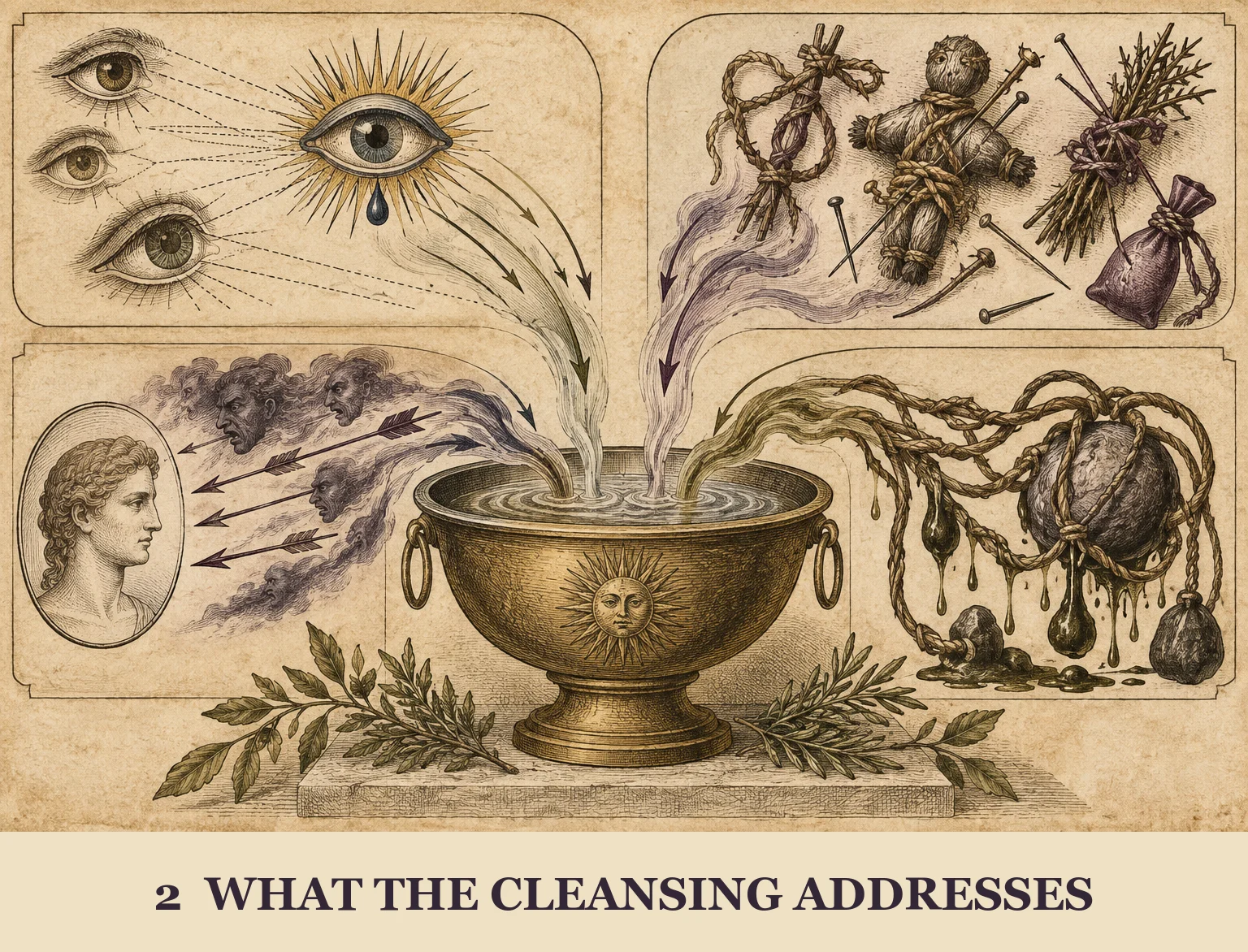
Tradition-specific language can appear in a client's description of a concern: Voodoo or Vodou, Wicca, Pagan magic, Santa Muerte devotion, Santería, folk witchcraft, ceremonial magic, or another current. The protocol is relevant when the concern is a hostile working or unwanted influence described with any of those terms. The tradition itself is not an attack. Wicca, Pagan religions, Vodou, and Santa Muerte devotion are not inherently harmful, and a practitioner should never treat someone's faith, altar, clothing, or devotional practice as evidence that they attacked anyone. The target of this cleansing is the unwanted condition, not a community or a named person.
This distinction also makes your operation stronger. A scattered decree that names every tradition and imagines enemies everywhere diverts attention from the beneficiary. A clean formulation names the intention: clear any harmful working, envy, projected hostility, draining link, or oppressive residue affecting this consenting beneficiary; restore balance; open an appropriate path forward. The six templates already provide the order. You do not have to turn the session into an investigation.
The evil eye is commonly discussed as envy or a harmful gaze. Witchcraft and curses refer to intentional workings. Psionic and radionics attacks describe directed mental or instrument-based operations in their respective esoteric vocabularies. A mental attack may be described as intrusive pressure or hostile thought projection. The protocol treats these as categories to be cleared within its practice, not as findings you can prove from a headache, a run of setbacks, a strange dream, or another ordinary event. Use the language that accurately states your intention without diagnosing a stranger's motives.
Likewise, “energy vampire” is a way of describing a draining relationship or unwanted tie in this context. It need not mean that a person is consciously stealing anything. Step 3 works on disconnection. Step 4 is traditionally described as removing entities from the body; in your operation it addresses the persistent burden indicated by that template's purpose. Neither stage gives you license to pronounce a medical or psychological condition spiritual in origin. If there is illness, severe anxiety, insomnia, threats, harassment, or a safety issue, take the appropriate practical and professional steps as well.
The protocol is therefore broad in scope but narrow in conduct. It aims to remove unwanted energetic conditions and restore the beneficiary's field. It does not identify an offender, return harm, punish anyone, or promise that every difficult circumstance will disappear. Keep that boundary in the wording of every session. It lets you work firmly without feeding fear.
Prepare the beneficiary, files, and operator
Begin with consent and a precise target. For work on yourself, use your own recent, clear photograph and full name. For another adult, obtain informed permission before using a photograph or personal details. For a property or business, work only with a place you own or are authorized to address; identify it consistently with its name, relevant address, and a suitable image. Do not include bystanders, neighboring properties, or uninvolved people merely because they appear in a photograph. A well-defined structural link is better than a broad, vague target.

Set aside one stable folder for that beneficiary. Keep the untouched original six templates separate. Open the first template and load the authorized photograph into its beneficiary position. Enter the full name where the template requests it. Then inspect every decree position: when you find a placeholder such as “name of beneficiary,” replace that placeholder with the same full name. Double-click the appropriate position, make the change, update the position, and verify the result. Leave fixed filters, symbols, and text that do not contain the placeholder intact. Repeat for all six templates.
Save each personalized template as a separate, clearly numbered file in that beneficiary's folder. Use names that match the six files shown here: 01 Blasting Glyph, 02 Undo Magick, 03 Psychic Vampire Clearing, 04 Remove Attachments, 05 Aura Clearing, and 06 Road Opener. These are organizational names, not a reason to rename a file extension that Fire Toolz manages. The original template label and Notes remain your authority when checking which file is which. If you work with multiple consenting beneficiaries, give each a separate folder so photographs and names cannot be mixed.
Before scheduling, reopen the six saved files one by one. Inspect the photograph, the beneficiary name, and every changed decree. It is easy to update the central picture and miss one text position elsewhere. That mistake weakens the internal coherence of the operation and makes later troubleshooting needlessly difficult. Review the grounding position, transfer card, and any Notes, but do not casually redesign a supplied template during your first run. Learn the existing operation before you create a variation.
If you are cleansing another adult, the related protection practice uses a separate Fire Toolz instance for the operator's Runic Protection template. Personalize that template for yourself, start it 30 minutes before the third-party cleansing, keep it active throughout the six stages, and stop it after the sequence finishes. That thirty-minute lead-in is not its total runtime. On a single computer, check that it can run both instances stably. For a self-cleansing, do not invent an extra requirement; follow the instructions for the version you actually use.
Give the session adequate time. With the 45-minute Blasting Glyph file and five two-hour stages shown here, the run lasts ten hours and forty-five minutes. The computer must remain powered and Fire Toolz open. Arrange power, prevent sleep during the session, and avoid a scheduled restart. A short technical test can confirm that the files load and Artillery advances before you commit to the full run. Preparation is part of the practice: when the files, times, and beneficiary are settled, you can focus on the operation instead of fixing mistakes halfway through it.
Step 1 – Blasting Glyph
The first template is Blasting Glyph, the forceful opening in this six-stage sequence. The screenshot shows the actual Fire Toolz arrangement: the beneficiary position at the center, glyph positions around it, and a grounding position at the side. Its role is to begin the clearing before the more specific work follows. It is not the whole cleanse by itself, and its intensity is precisely why its time should be controlled.
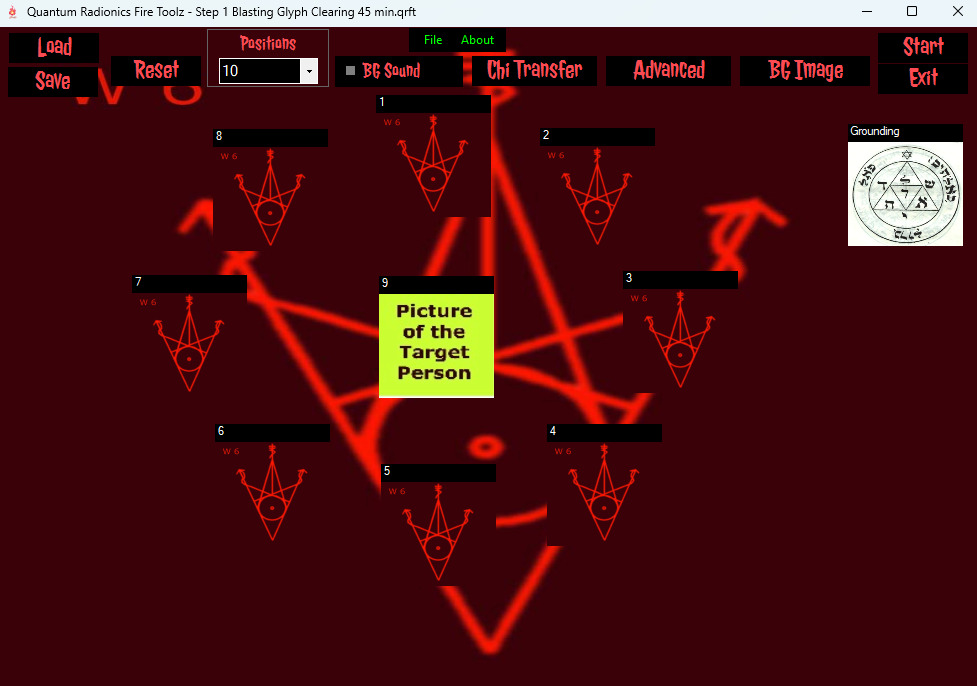
The Blasting Glyph file in this set is labeled 45 minutes. Enter 45 minutes for row 1 when using that file, and check the Notes in your own installed version before starting. Do not extend the opening simply because the situation feels severe or because a longer run seems more powerful. The protocol places five more stages after Blasting Glyph; those stages are part of the answer. With this 45-minute opening, the complete schedule is 645 minutes.
This opening addresses the sense of accumulated, entangled interference without asking you to name a supposed attacker. Hold the beneficiary and intention clearly. If your wording is needed, keep it aligned with the template: clear unwanted harmful influences from the consenting beneficiary, and allow the remaining stages to complete the work. Avoid adding decrees of revenge, return, punishment, or domination. A cleansing is about releasing a burden and restoring the beneficiary, not creating a new conflict.
The strongest temptation with a dramatic first stage is to watch the screen for proof that something is “happening.” Fire Toolz can show the template running and the transfer card moving through its positions. Those are important operational checks. They do not tell you that a specific spell has been discovered or that a named person is responsible. Confirm the software is doing what you configured, then let the timed stage hand over to step 2.
Step 2 – Undo Magick
The second template is Undo Magick. Its screenshot shows several distinct filter positions around the beneficiary, including work directed at other people's magic, plots, turbulence, and protection. After the Blasting Glyph opening, this stage gives the operation sustained time to address witchcraft, negativity, envy, and the mixed forms of unwanted influence that people often describe under those words. Set its duration to 120 minutes.
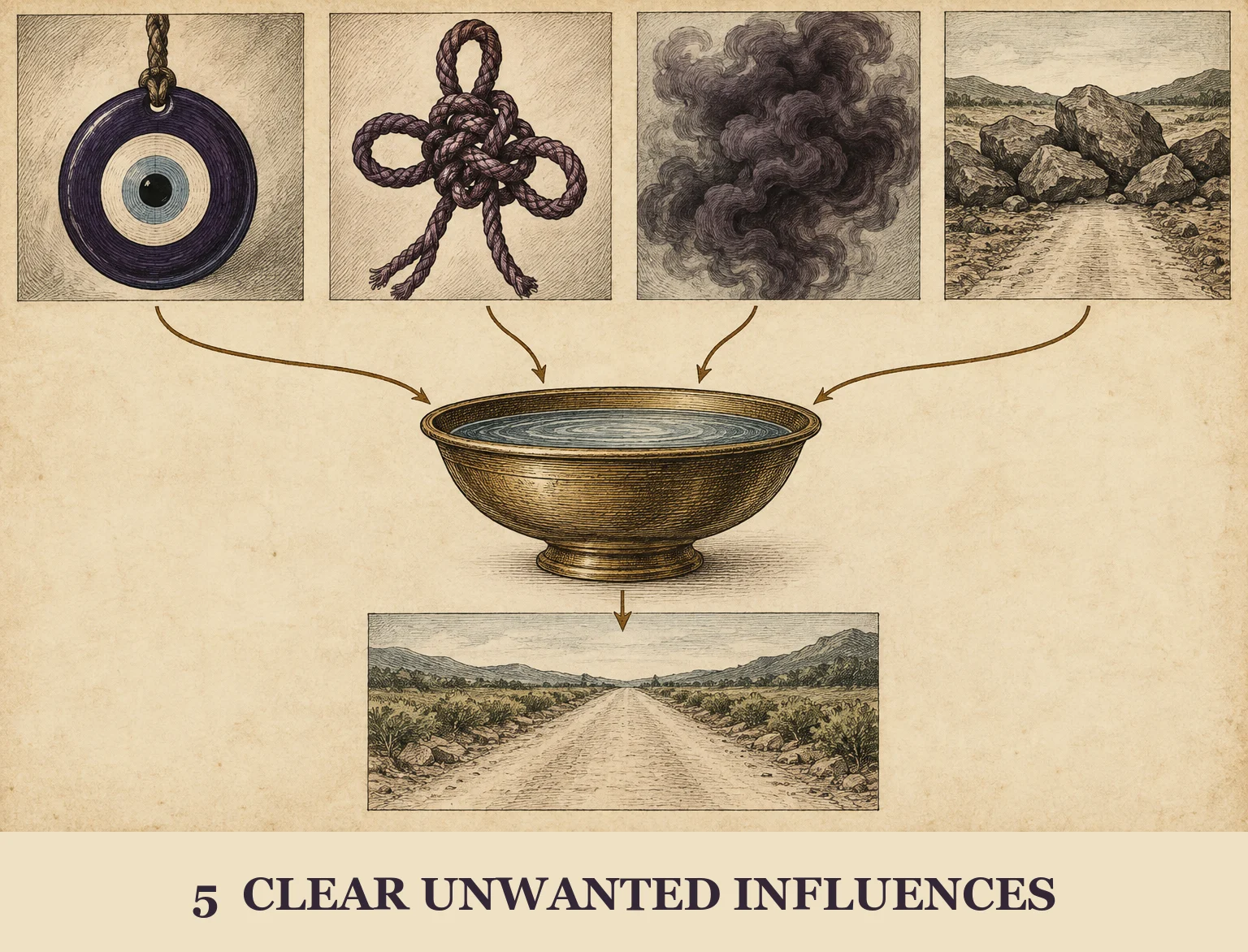
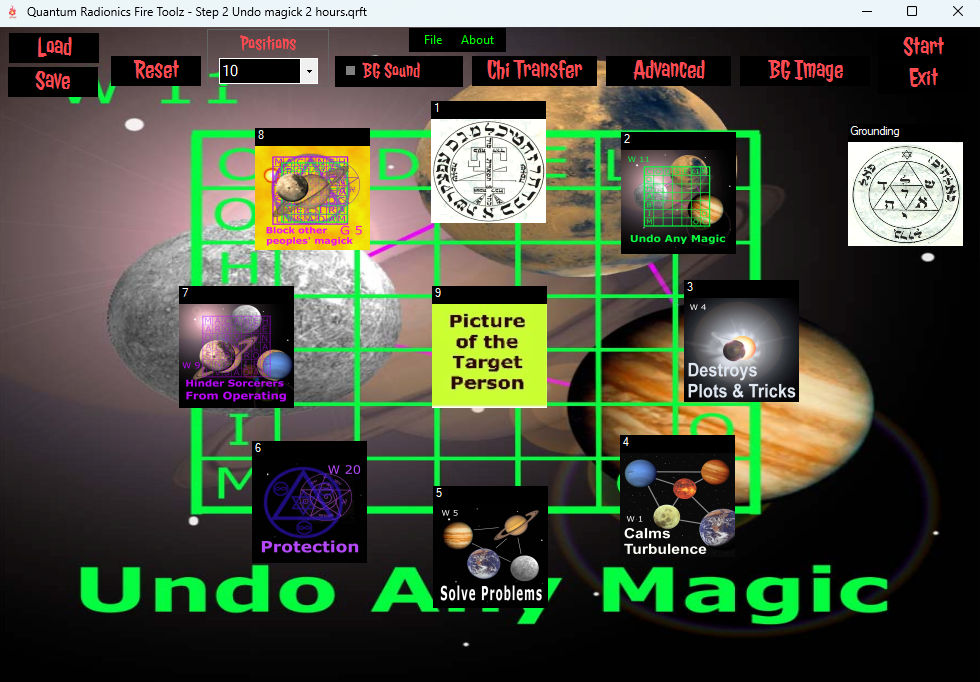
This is where the broad scope of the protocol becomes practical. A client may say “evil eye,” another may say “hex,” another “witchcraft,” and another “everything has felt heavy since that conflict.” The template's purpose is not to prove which description is true. It provides a defined clearing tendency that can address the unwanted condition without making your session dependent on a speculative diagnosis. Keep the name, photograph, and written decrees consistent, and let the template's filters do the work assigned to this stage.
If the concern involves a specific tradition—Voodoo or Vodou, Wicca, Pagan practice, Santa Muerte, or another form of magic—word the operation around any hostile act or harmful influence, not the tradition itself. A person can hold a religion sincerely and harmlessly. This distinction is both ethical and technically cleaner: you are specifying the condition to remove from the beneficiary rather than scattering the intention across identities and assumptions.
“Bad luck” needs the same discipline. A run of losses or delays can have ordinary causes that require ordinary action. The template addresses the energetic pattern described by that phrase within the cleansing. It does not replace checking an invoice, repairing a machine, setting a boundary, or getting help with a real-world problem. Use the two-hour stage for the operation and keep your practical judgment available.
Once step 2 has completed, the sequence should not return to the opening by accident. The movement is forward. The next template is about ties and drainage, which is a different kind of work from the broad removal that step 2 performs.
Step 3 – Psychic Vampire Clearing
Step 3 is Psychic Vampire Clearing. Its function is separation and clearing of a draining link. The screenshot shows the beneficiary surrounded by repeated talisman positions; those positions belong to this actual template, not to a generic illustration. The language may describe an unwanted tie, an exhausting relationship, a repeated pull on attention, or a pattern that feels as though the beneficiary's vitality is continually being drawn away. Set the template for 120 minutes and keep it in the third position.
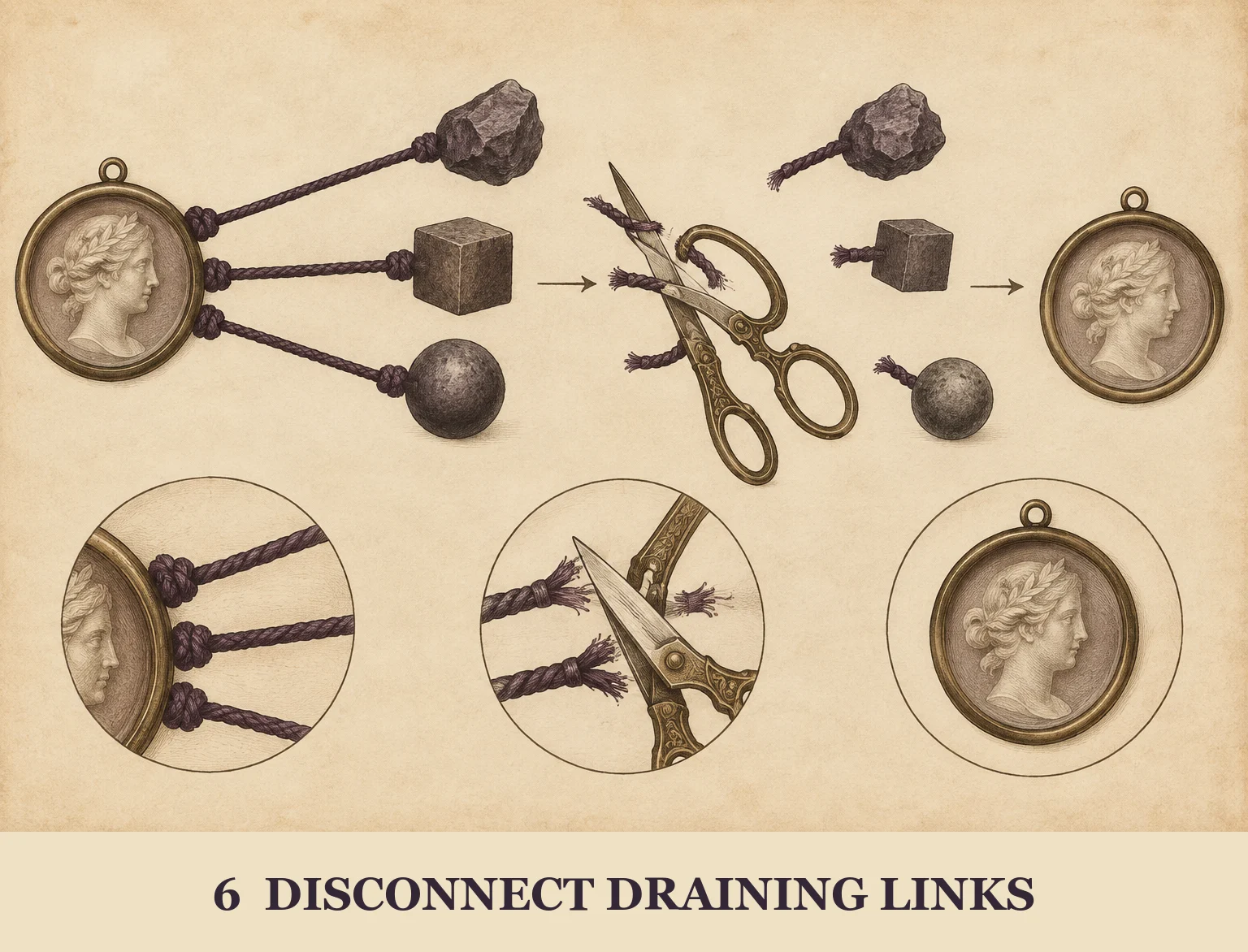
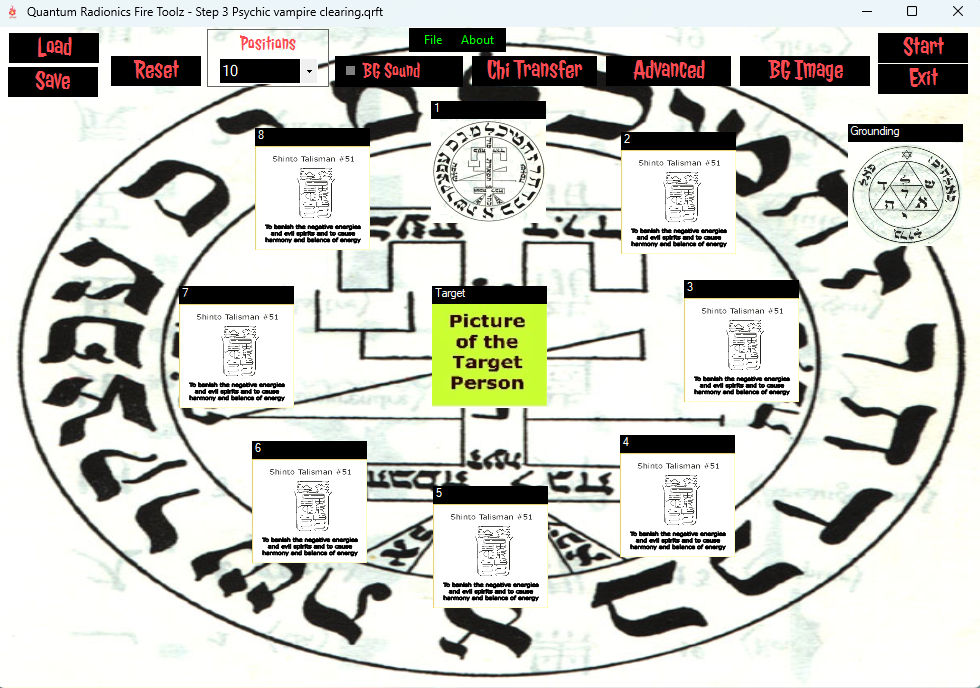
Disconnection is not the same as attacking the person at the other end of a perceived tie. The operation is directed to the consenting beneficiary and their boundary. A concise intention is to release draining connections that are not beneficial and restore the beneficiary's autonomy. Do not load another person's photograph as an enemy target, and do not use this stage to force someone to love, leave, obey, or suffer. The method is strongest when its direction is simple: detach what should no longer bind the beneficiary.
The word “vampire” can lead to hasty accusations. Resist that. Someone may feel depleted after an intense conversation, a caregiving demand, a breakup, or a stressful workplace. A cleansing can be part of how they reclaim their own focus, but it cannot establish that another person performed an occult attack. Use the template for the energetic relationship it is meant to address, and handle ordinary boundaries with ordinary clarity. You may need to reduce contact, say no, rest, or seek support; no screen replaces those decisions.
This stage sits between the general clearing of step 2 and the deeper removal of step 4. That placement matters. In practice, a field can be cleared yet still feel linked to an old drain. Conversely, trying to repair the aura before addressing the link can turn restoration into an endless maintenance task. The sequence breaks the tie before rebuilding.
Check that Artillery transitions from the second file to the third at the time you entered. You do not need six simultaneous windows for the cleansing. One Artillery sequence should run each personalized template in its assigned order. If it stops unexpectedly, record the last completed step and troubleshoot the interruption before resuming; do not blindly restart the whole operation.
Step 4 – Remove Attachments
The fourth template is Remove Attachments. It is aimed at persistent, intrusive attachments and burdens described in entity language. Its screenshot shows the beneficiary at the center of repeated sigil positions against a numbered background. It follows Psychic Vampire Clearing and precedes Aura Clearing. Set the duration to 120 minutes.
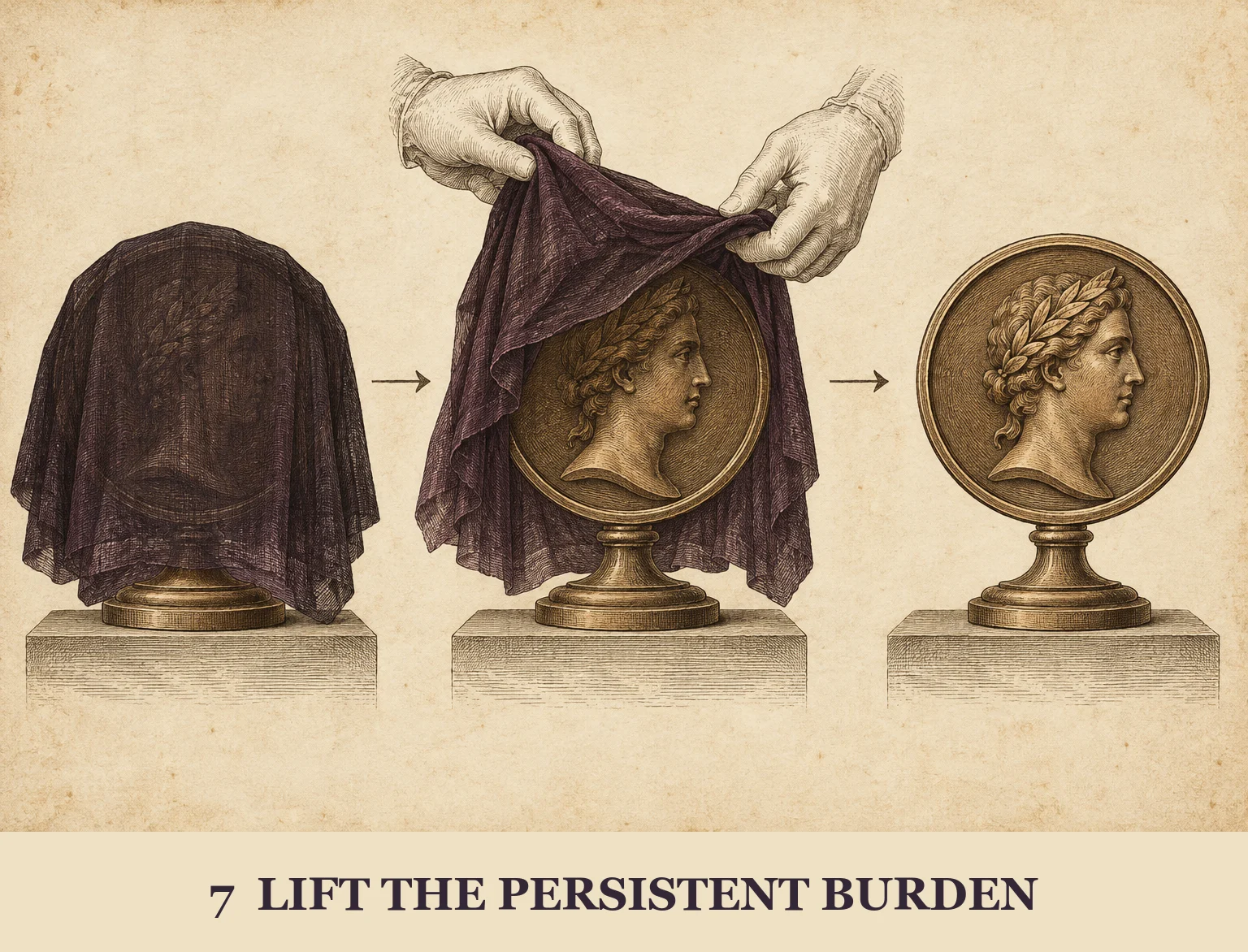
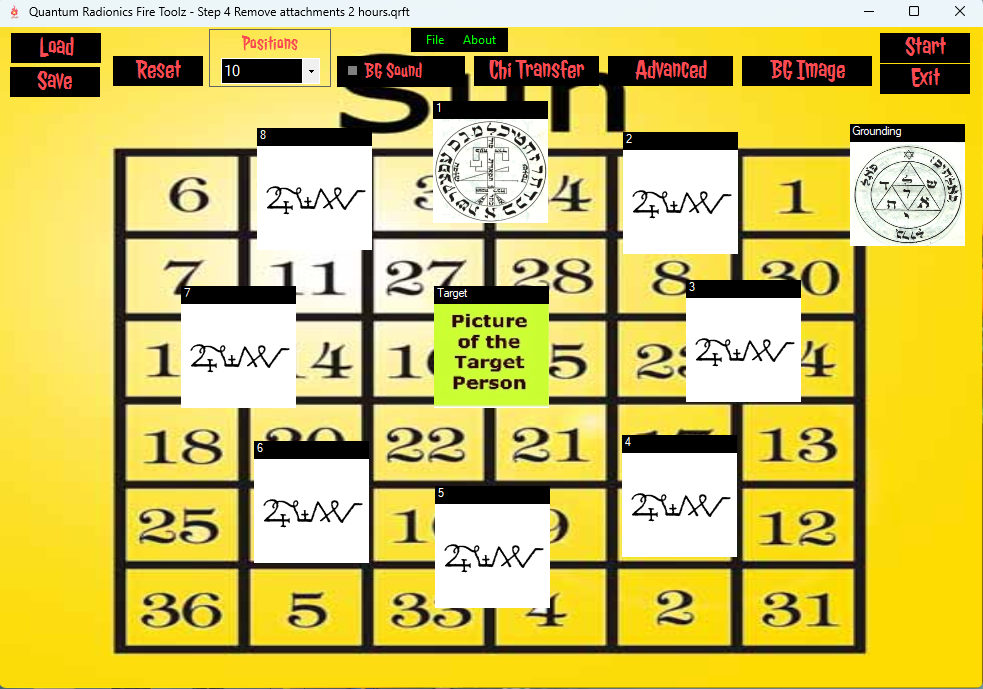
Approach this stage with steadiness, not horror. The template name states the operation's intended action; it does not give anyone a diagnosis or prove that a spirit, attachment, or entity exists in a particular person. That precision protects the beneficiary. Frightening someone by announcing an unseen occupant can intensify distress, while a calm, consent-based operation keeps the focus on removal of unwanted influence and restoration of the person's own space.
Do not embellish the supplied template with hostile images or dramatic claims. Use the beneficiary's verified photograph and name, preserve the prepared filters, and let this stage occupy its intended place in the protocol. If a person reports pain, severe insomnia, frightening perceptions, confusion, or a sudden change in functioning, encourage appropriate medical or mental-health care. The cleansing may be a chosen spiritual practice alongside that care, but the template does not evaluate those symptoms.
Step 4 also marks a turning point. The first four stages focus principally on clearing and separation. The final two change the direction toward repair and forward movement. This is why you should not end the session here even if you believe the “heavy” part is done. A complete operation includes both the release and the rebuilding.
If you are running the sequence for someone else, keep your separate operator protection active through this stage and beyond. Do not stop it after Blasting Glyph or after Remove Attachments. It covers the full third-party session and closes after step 6.
Step 5 – Aura Clearing
Step 5 is Aura Clearing. Once the earlier clearing and removal stages have finished, this template focuses the operation on the beneficiary's aura. Its screenshot shows a repeated sigil arrangement around the target against a luminous background. Set it for 120 minutes in the fifth Artillery row. The order is as important as the name: this aura stage follows Remove Attachments, and Road Opener follows it.
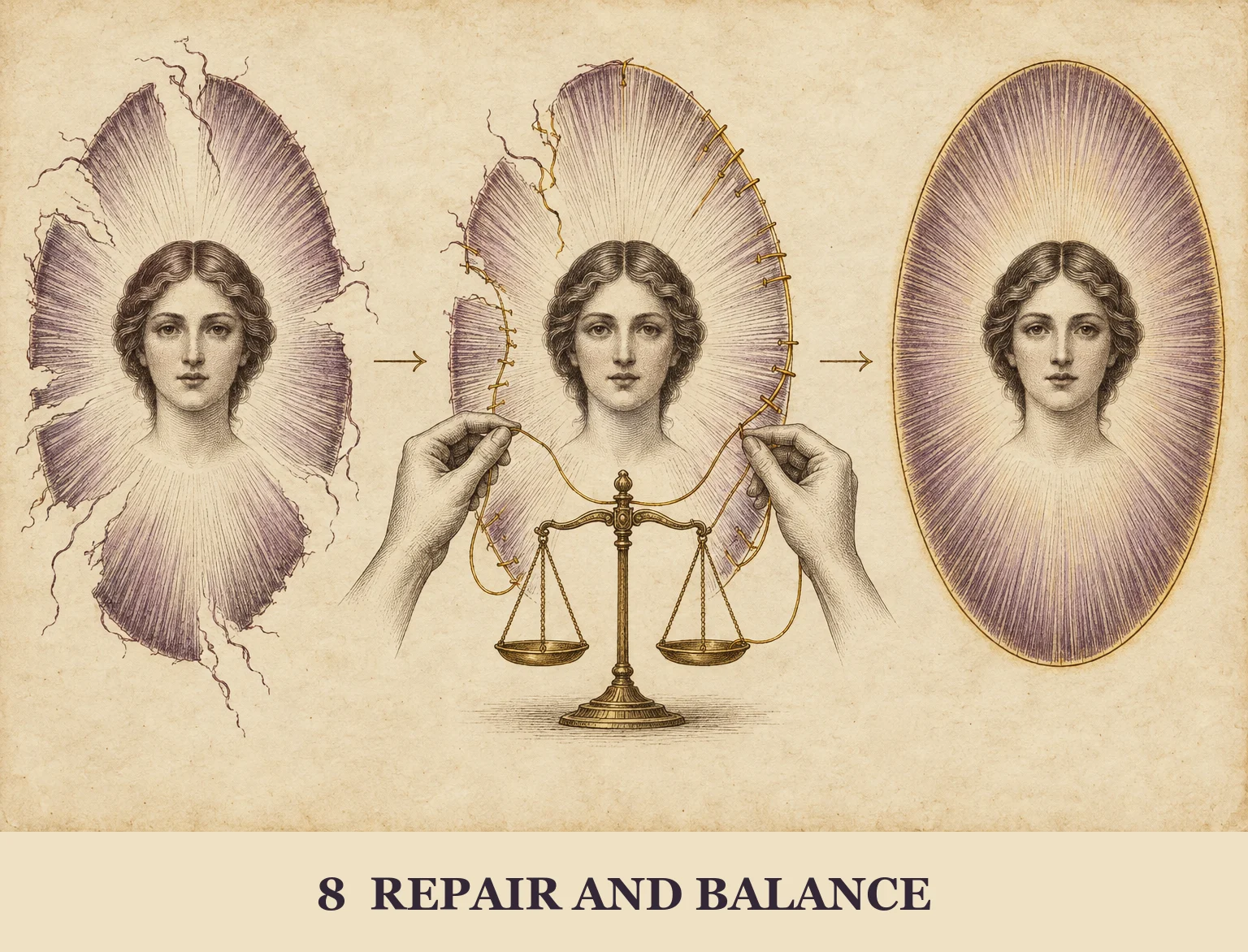
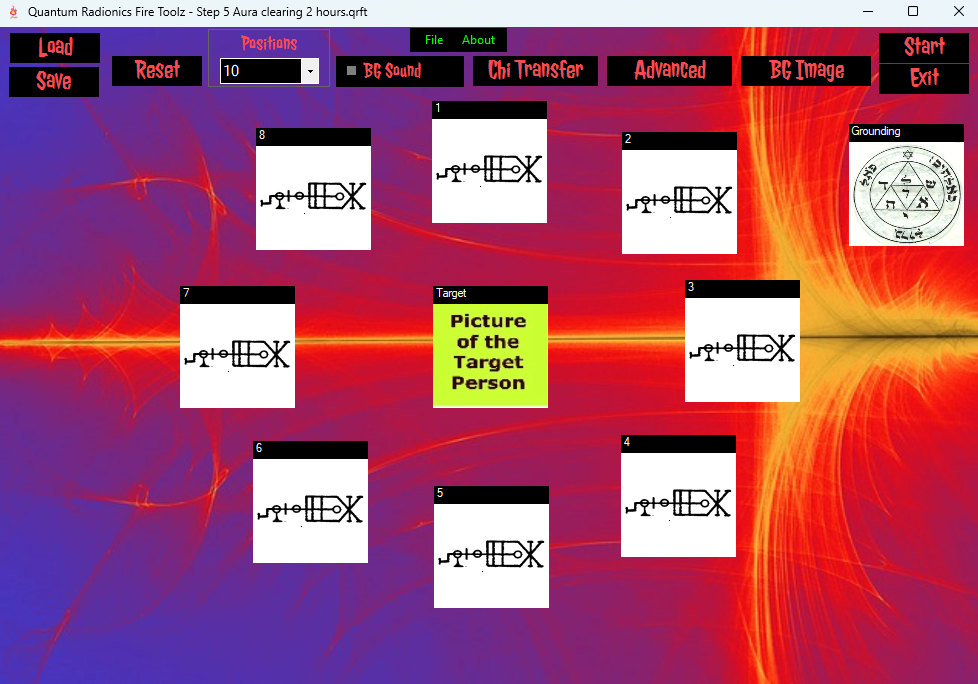
The aura is the field language used by this practice to speak about the beneficiary's energetic condition. When practitioners talk about gaps, weakness, or imbalance after a draining period, this is the stage intended to address that condition. Its aim is not merely to make the person feel temporarily lighter. It brings balance into the operation before the final opening. The clear space created by the earlier stages now receives a constructive tendency.
Do not turn this into a contest to measure invisible damage. No screenshot or animation can tell you how many “holes” were present or calculate a repair percentage. Check that the fifth file is the correct personalized template and that the two-hour duration is entered. The meaningful software evidence is that the intended file ran in the proper slot for the intended time. In the practice itself, maintain a calm, direct intention of balance and integrity for the beneficiary.
This is also a good moment to remember why the entire protocol is longer than a single dramatic cleansing. Removal without restoration leaves the work incomplete. A person who has been preoccupied with hostile influence may need permission to stop looking over their shoulder. The fifth stage invites attention back to their own field, their own choices, and their own capacity to recover.
Where a beneficiary has practical needs—sleep, safety, conflict resolution, medical care, financial organization—support those needs in the ordinary world as well. Balance is strengthened by habits and decisions, not by repeatedly checking whether the threat has returned. Let the sixth stage move the attention ahead.
Step 6 – Road Opener
The sixth and final template is Road Opener. Its screenshot shows the beneficiary at the center of positions for balance, success, fortune, and opportunity. It is not a substitute for the clearing; it is the closing direction of the operation. Set it for 120 minutes in row six. When it finishes, Artillery should stop if Repeat is off. This positive ending matters because the purpose of cleansing is not to spend the rest of your life in defense mode. The goal is to recover room to act.

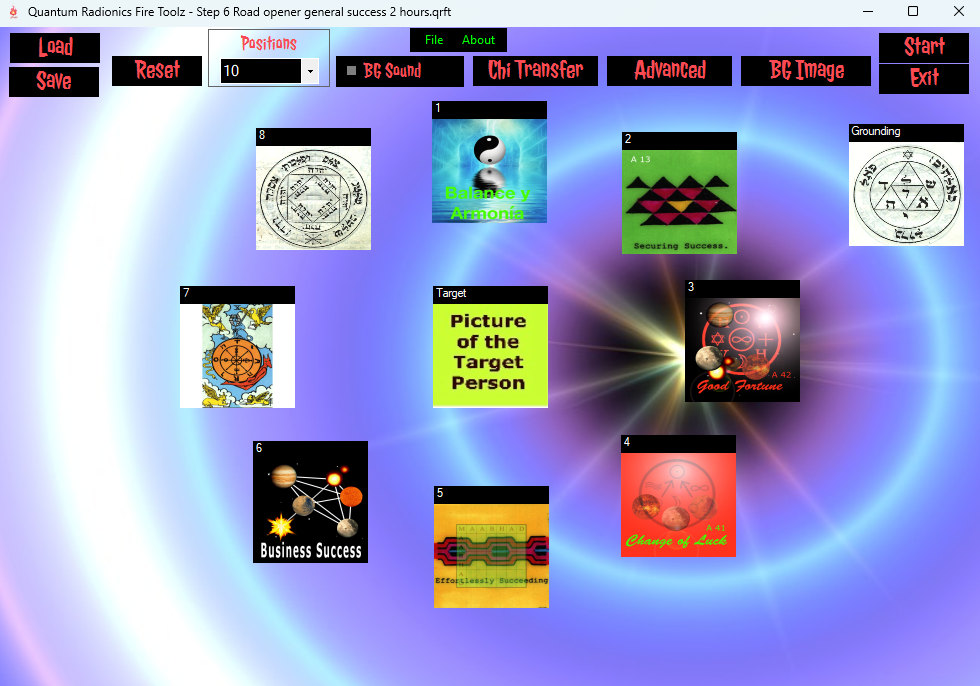
“Open roads” is practical language in esoteric work. It can mean an unobstructed sense of direction, renewed confidence, better timing, or the ability to notice choices that were lost amid fear and fatigue. The template aims the operation toward opportunity and general success after the earlier stages have cleared, disconnected, removed, and repaired. It does not guarantee a particular job, relationship, legal result, or deadline. An open road still asks the beneficiary to walk.
Let this last stage remain broad enough to serve the beneficiary without manipulating other people. If you want a specific outcome later, create a separate operation after the cleansing is complete and the intention is clear. Avoid inserting a sales target, romantic demand, or named rival into this closing template. Its job is to finish the cleansing on constructive ground.
When the timer ends, verify that the sixth file really completed and the sequence stopped. Record the date, beneficiary identifier, template version, durations, and any technical interruptions in a private practice log. Keep the log factual. “Artillery completed all six rows” is a useful entry; “we proved the curse was broken” is not something the program can establish. Your notes should help you improve preparation and observe your own practice, not become a source of fear.
After the operation, invite the beneficiary to take one grounded next step: tidy their space, rest, make a needed call, set a boundary, return to a paused project, or address the real-world issue that prompted the cleansing. This is the bridge from an esoteric operation to a lived change in direction.
Run the six files in Artillery and close the session cleanly
With the six personalized templates saved in a stable folder, open Advanced → Artillery in Fire Toolz. Activate rows 1 through 6. Load Blasting Glyph in row 1, Undo Magick in row 2, Psychic Vampire Clearing in row 3, Remove Attachments in row 4, Aura Clearing in row 5, and Road Opener in row 6. The rows are not a gallery: they define the execution order. If you select the right six files in the wrong rows, you have changed the protocol.
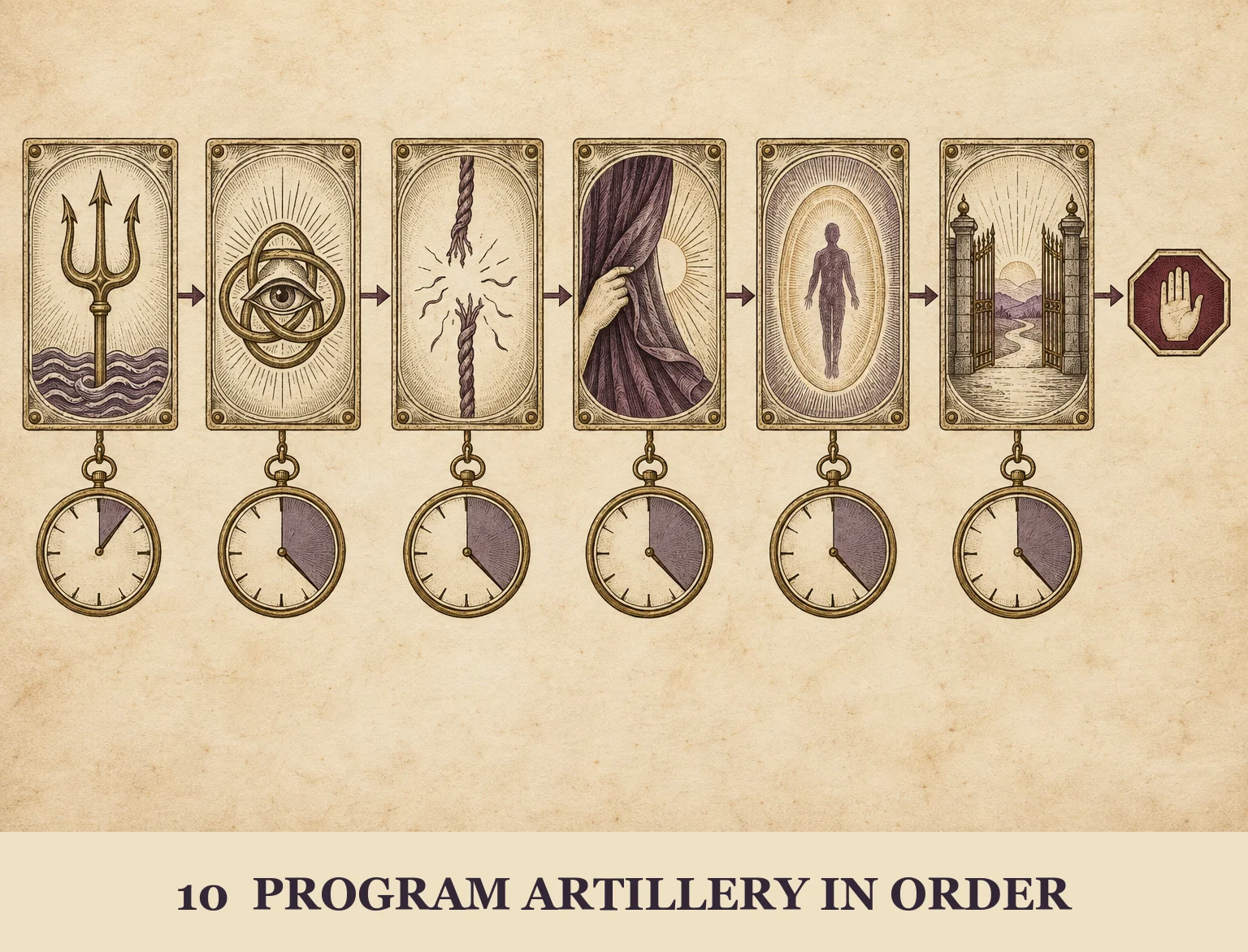
Enter 45 minutes in row 1 for the Blasting Glyph file shown here, and 120 minutes in each of rows 2 through 6. The arithmetic is simple and worth checking: 45 + (5 × 120) = 645 minutes, or ten hours and forty-five minutes. Artillery uses minutes, so do not type 2 when you mean two hours. Confirm that Repeat is off for a single complete cleansing. With Repeat on, the program returns to Blasting Glyph after step 6 and continues cycling until stopped, which is a different decision.
Before pressing Start, perform a final six-point inspection: the correct beneficiary appears in each file; every placeholder has been replaced; all six rows are active; the files are in order; the durations are correct; and Repeat is off. Save the Artillery configuration once it is correct. A saved sequence points to the template files at their current locations, so moving or renaming the folder later can break those paths. On any future use, reload and recheck all six paths, names, times, and the target before starting.
Fire Toolz must stay open for the run. Minimizing its window is fine; letting the computer sleep, shutting it down, or allowing an update to restart it is not. If a long session is interrupted, establish which row completed and which was active before deciding where to resume. Do not assume the operation finished because the clock moved forward, and do not repeat every stage automatically because one window disappeared. Operational discipline is part of good esoteric discipline.
For third-party work, remember the separate Runic Protection instance described earlier: start it thirty minutes before the cleansing, keep it running through the full six stages, and close it when the sequence ends. Monitor the computer's stability if two instances are running. For any work with another adult, consent remains essential throughout; if the person withdraws it, stop the operation. Avoid directing the protocol at minors, animals, groups, or people captured incidentally in a photograph.
The completion check is modest and useful. Confirm that row 6 completed, the Artillery sequence stopped, and the files used were the intended ones. Then step away from the screen. A cleansing is not improved by compulsively repeating it, searching for hidden attackers, or interpreting every discomfort as evidence that the work failed. If a real threat, illness, harassment, or psychological crisis is present, respond to it directly with the appropriate people and services. The operation belongs alongside clear judgment.
The six-step protocol is strongest when its logic is respected: a short forceful opening, sustained clearing, disconnection, removal, repair, and a constructive close. Prepare one beneficiary carefully, run one sequence in order, and give the final stage the same attention as the first. Then let the beneficiary use the space the operation was meant to create.
Ready to begin? Prepare your six personal templates, review every beneficiary position, and schedule one complete Artillery run. If you are new to the program, explore the Quantum Radionics Fire Toolz articles before building a variation of this protocol.